
We often believe some common dental myths about dental care, which can become harmful to our oral health. In reality, such misconceptions are slowly damaging your teeth and dental care, even though you may not realize it.
These myths about oral health hide real teeth and gum problems and often delay timely treatment.
In this blog we discuss 7 myths about oral health that can be dangerous for your teeth and gums, along with the truth behind each and how you can properly maintain your oral health.
The main reason for the existence of so many myths about oral health in Bangladesh is lack of awareness and hereditary misconceptions. We don’t go to the dentist until it hurts because the “no pain, no problem” mentality works for us. Besides, fearing the cost or pain of treatment, many people rely more on misleading advice than scientific methods.
Avoiding the dentist based on advice from elders or informal sources often leads to delayed care. As a result, small problems grow silently to create major dental complications. These dental myths persist mainly due to a lack of proper education and low awareness about dental hygiene. Therefore, if you want to stay healthy, it is in demand of the time to know the correct information that the dentist explains.
Many people think that scaling will make the teeth thinner or damaged. But the truth is opposite. In fact, this is a huge misconception that prevents many people from seeking dental care even when they need it. Regular dental visits are very important to maintaining your oral health, and scaling is a part of that.
First of all, it is important to clarify that scaling does not cut or erode any part of your tooth. The hard outer layer of teeth is enamel, which is one of the hardest tissues in the body. A skilled dentist will never do anything that damages this enamel. Instead, during scaling, hard deposits (plaque and tartar) are removed, which often cover the original structure of the tooth. So after scaling, teeth may feel smoother or slightly different, but they are not thinner but in reality the teeth are the same as before.
Scaling is essentially a safe and professional cleaning process. It removes plaque, tartar and bacteria accumulated on the teeth, which can cause gum disease or tooth damage if left for a long time. Removing this buildup makes it easier to maintain healthy teeth and improves gum health.
Avoiding scaling thinking it is harmful is actually risky. Because accumulated dirt gradually damages the teeth and gums. So a dentist always advises to maintain your oral health by scaling on time, it is not a harm, but a part of proper care.
Many people think that there is no need to see a dentist if there is no toothache. But this idea is the most dangerous. Most dental problems start silently without any pain. To keep your oral health good, it is important to have regular dental visits, not only when there is a problem. Sometimes, a small cavity or mild gum problem can be easily fixed if caught early.
Many dental problems, such as tooth decay or gum disease, do not cause any pain at first. This period is considered to be the most important, because then the problem is small and can be solved easily. But if you just wait for the pain to subside, the problem only gets worse. Infection can then spread, increasing the risk of tooth loss and even requiring major treatment.
Dentists generally emphasize preventive care, meaning we try to stop problems before they happen. We provide perfect treatment for any oral health problem with our advanced technology. Therefore, many patients travel to cities like Chittagong for advanced dental treatment. So don’t listen to all these myths while you have time and come to our clinic for a checkup.

Many people think that baby teeth will eventually fall out, so there is no problem even if they are damaged. But in reality, this idea can pose a big risk to your child’s oral health. Milk teeth are actually not only temporary, but they also play a very important role in the proper growth of future permanent teeth. So it is important to maintain proper dental care and oral hygiene from childhood.
Baby teeth are not only for chewing food, but they also help in the baby’s jaw development and proper alignment of the teeth. If decay or cavities are left untreated, bacteria can spread and affect surrounding teeth. This can lead to infection, which can damage the permanent teeth below.
Another important point is that if the baby teeth fall out early, the adjacent teeth may move into place. As a result, there is a problem with the placement of permanent teeth, and later orthodontic treatment may be required. So instead of thinking “whatever will fall out”, taking care of baby teeth from the beginning is essential for your child’s future healthy smile
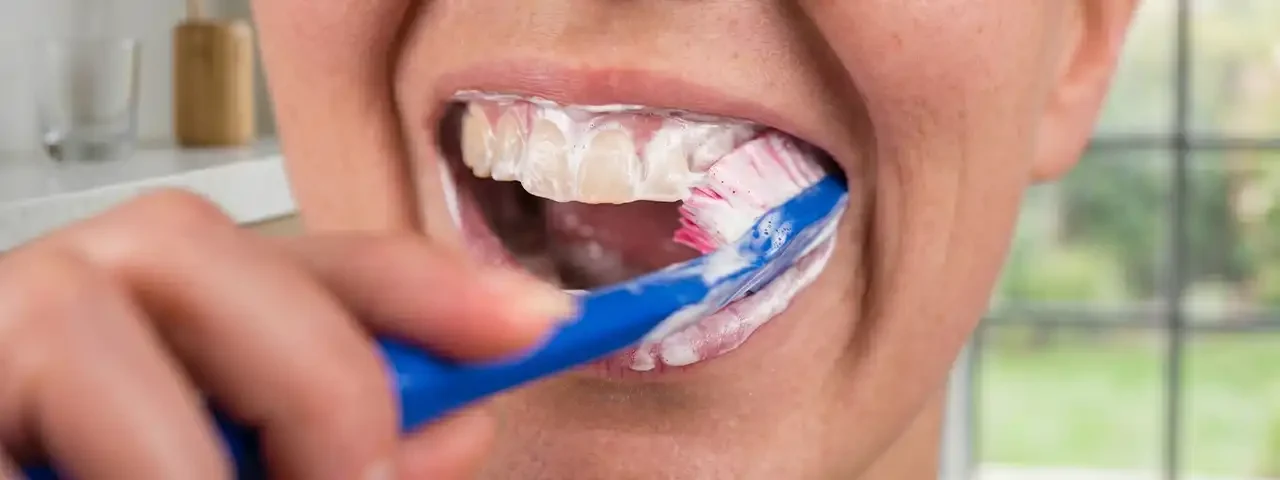
Many people think that if you brush hard or brush your teeth with more pressure, the teeth will be cleaner. In fact it is a harmful habit. Improperly using a toothbrush can harm your oral hygiene instead of improving it. Brushing like this for a long time can lead to enamel loss, gum removal, and even bleeding gums or tooth sensitivity problems.
The outer layer of the tooth, enamel, is strong enough to withstand excessive pressure. Daily hard brushing gradually wears down enamel. At the same time, excessive pressure on the gums can lead to gum recession, which means the gums recede. As a result, the sensitive part of the tooth is exposed, which then creates tooth sensitivity and pain in hot and cold foods.
Proper dental care does not mean brushing hard, but brushing properly. Always use a soft-bristled toothbrush and brush in a light, circular motion. Brushing at least twice a day is enough to keep the teeth clean and without any damage. Remember, brushing hard doesn’t mean clean; Instead, smart brushing will keep your teeth and gums healthy for a long time.

Many people think that teeth can be kept clean only by using mouthwash; there is no need to brush with a toothbrush or toothpaste. But in reality, this is a misconception. Mouthwash is an adjunct to your oral hygiene, but it’s never a substitute for brushing. Plaque and bacteria accumulated on the teeth cannot be completely removed by just brushing.
Regular brushing and flossing is essential to ensure proper dental care of your teeth and gums. The brush removes dirt and bacteria from the teeth, and the floss cleans the plaque that accumulates between the teeth where the brush cannot reach. If you don’t do these two together, your gum health can gradually deteriorate.
Mouthwash is mainly used to keep breath fresh or reduce excess bacteria, but it alone can never do the whole cleaning. So if you want really healthy teeth, continue brushing and flossing daily and use mouthwash only as an extra support, not as a replacement.

Many people think that eating sugar will immediately destroy the teeth, but the matter is not so simple. In fact, along with bacteria and plaque buildup, sugar slowly damages teeth. When you eat sweets, bacteria produce acid, which, over time, erodes enamel and can lead to cavity formation.
So the problem is not eating sugar, but not following oral hygiene properly after eating. By following regular brushing and proper dental care, you can easily maintain good teeth.
Many people think that teeth whitening at home is safe, but in reality, it is not so easy. Improperly or excessively used, these home whitening methods can erode tooth enamel and subsequently increase tooth sensitivity. Sometimes they temporarily change the color of your teeth, but in the long term, they damage oral health.
There is also a big misconception here; many people think that teeth will be healthy only by whitening. But in reality, tooth loss is mainly due to bacteria and plaque buildup. These bacteria slowly produce acid, which, over time, erodes enamel and creates cavities. Whitening cannot stop this process.
So if you want to whiten your teeth safely, it is always better to take professional dental care. A dentist understands the condition of your teeth and gives the right treatment, which is both safe and effective. Remember, not only white teeth but healthy teeth are most important for a beautiful smile.
Avoiding common dental myths is very important in dental health. In our country, many people delay care due to a lack of proper information, which later creates major dental complications. Remember, neglecting minor dental problems can gradually lead to more serious health issues.. So trust the scientific information that the dentist explains rather than the information heard by people. Your awareness can keep you smiling. Get your oral health checkup today and take care of your teeth with the right information!
Yes, of course. Many dental problems such as cavities or gum disease, do not cause pain at first. So if you don’t have dental visits on time, the problem can get bigger.
No, baby teeth are very important. They help in baby’s jaw development and make room for permanent teeth to erupt properly. If these get damaged, it can cause problems in the future.
No, rather damage. Hard brushing can lead to enamel erosion, gum recession, and tooth sensitivity. Brushing properly with a light hand is best.
Mouthwash only helps to keep the mouth fresh, but it cannot completely remove plaque or bacteria. So brushing and flossing must be done
Not always, using the wrong method can damage enamel and increase tooth sensitivity. It is best to consult a dentist for safe whitening.

Stay connected with us on social media for the latest updates, offers, and more. Join our community!
Momtaz Height (3rd Floor), Beside to NCC Bank, Opposite to Islami Bank, Boropol Moor, Halishahar, Chattogram
+880 1778 912823
Copyright © 2026 by Dr. Masum’s Dental Clinic | All Rights Reserved. Powered by Marketing Bee