
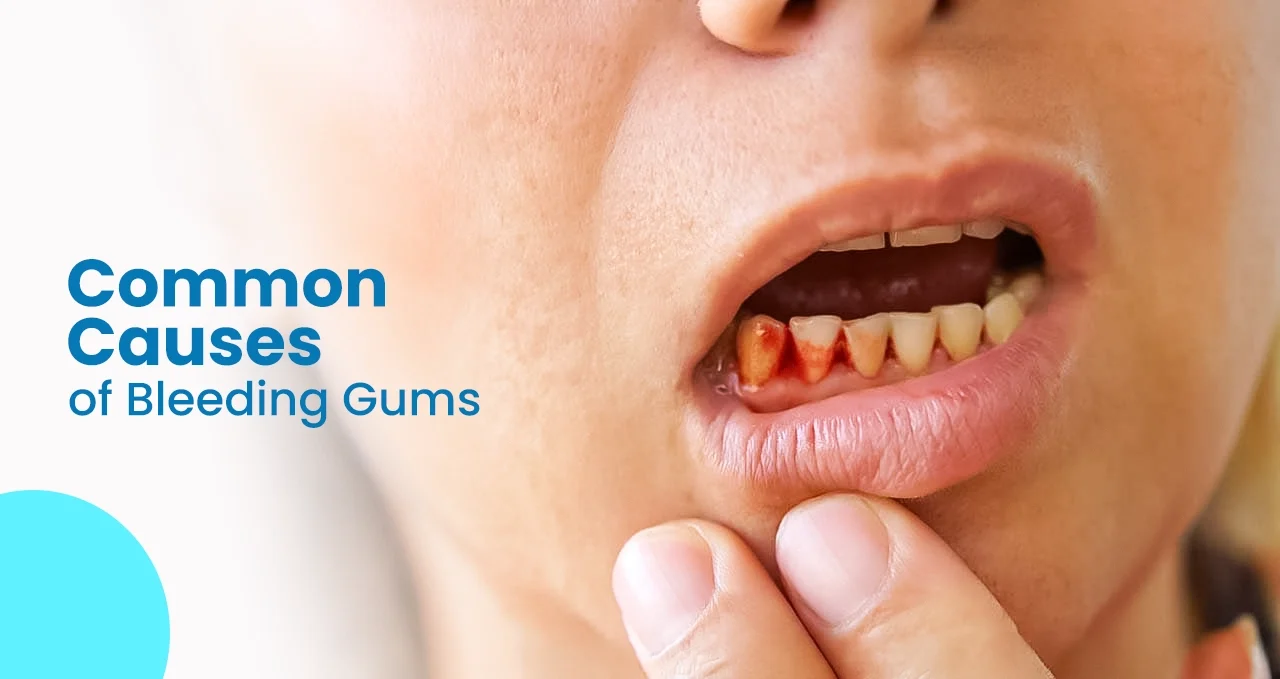
Most of us notice blood in the sink while brushing, blame the pressure, and get on with the day. Brushed too hard, we tell ourselves. That is sometimes true. More often than people think, it is not.
This blog explains the symptoms and treatment of bleeding gums in the same straightforward way we discuss them with patients. Causes first and then the warning signs, then home care, and finally the point where letting a dentist take over makes more sense.
Do not treat bleeding gums or swelling as small matters. Waiting can allow some gum problems to become more difficult to treat. Dr. Masum’s Dental Clinic in Chattogram handles gum trouble of every kind, and we also do root canals, implants, smile design and orthodontics. Fifteen years of practice sits behind that. So does modern equipment. More importantly, our staff take time to listen to patients rather than rushing through appointments.
Patients blame the brush almost every time. Pressed too hard, doctor. Maybe. Rough brushing on its own genuinely can draw blood, and so can rough flossing, or a week of doing neither. Underneath all of that, plaque is what usually causes the actual bleeding, and that part keeps getting missed.
Dental Plaque does not need an invitation. Plaque settles along the gum line, where the teeth meet the gums. Once plaque stays there, the gums can become irritated and inflamed. The gum under the buildup gets irritated and stays that way. Puffiness comes next. As the gums become inflamed, even gentle brushing can cause them to bleed.
Gingivitis is what dentists call that early inflammation, and it does not stay quiet forever. If gingivitis is left untreated, it can progress to a more serious form of gum disease.
Bleeding every single time you brush deserves a proper investigation. Find out what keeps feeding it. If you are unsure what is causing the bleeding, come see us. Digging out the actual cause is literally our daily job.
Bleeding that keeps coming back every few days is an early warning, not bad luck. Early on it feels like nothing. A little pink in the sink. People shrug.
Gums turn redder than they should be and puff up around the teeth. Bacteria in plaque can irritate the gums. Even gentle brushing can cause inflamed gums to bleed.
The good news is that early gingivitis can often be controlled. Better oral hygiene does most of the fixing. Good oral hygiene and consistent care are often enough to control early gingivitis. What you should never do is shrug at bleeding that keeps happening week after week. Inflammation that sits in the gums for months rarely stays on the surface.
If untreated, gingivitis can progress to periodontal disease. The infection stops being a surface problem at that point. Small gaps open between teeth and gums, and dentists have a name for them, gum pockets. These pockets can trap plaque and bacteria in areas that are difficult to clean with a toothbrush. Meanwhile the gums keep pulling away from the teeth.
Advanced cases go further still. The tissue and bone holding teeth in place take real damage. Teeth loosen. In severe cases, teeth can eventually be lost. Repeat bleeding deserves a dentist’s opinion, not a shrug.
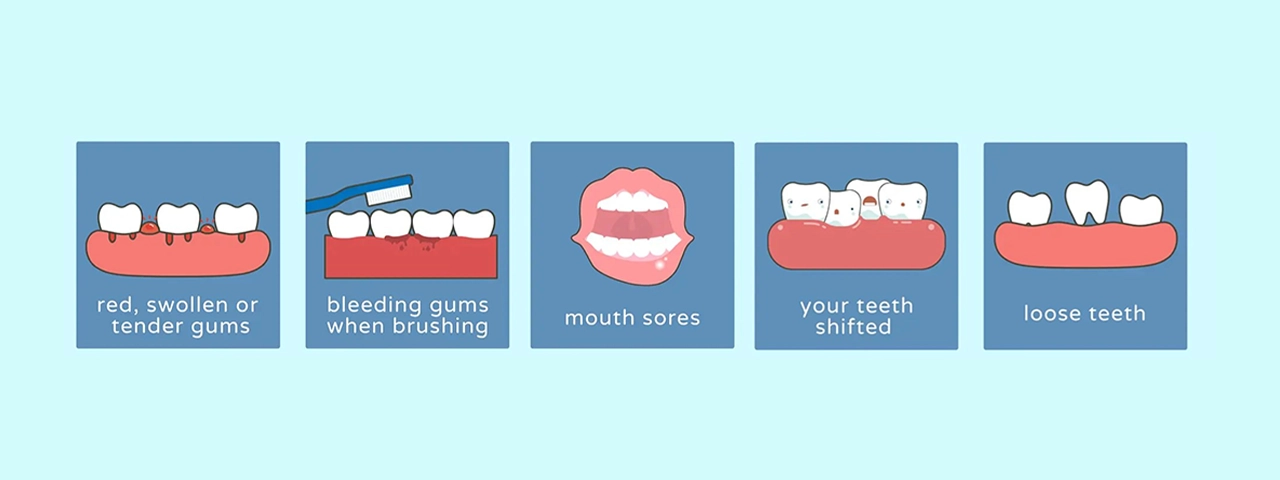
Blood is the symptom everybody notices. It is also not the only one. Red gums, puffy gums, gums that hurt when touched, all complaints too. The trouble with early gum problems is how quiet they stay. Not much pain, so people carry on brushing right past the warnings.
The early stage is a sneaky thing. What shows up most often? Bleeding while brushing or flossing. Gums are redder than usual. Some puffiness along the gum line. Tenderness if you press the area. And a general irritated feeling that refuses to settle. Plaque sitting on the gums causes the whole lot of it. At this stage, improving oral hygiene and getting appropriate dental care can often reverse the inflammation
Advanced signs are harder to miss. Gums recede and teeth start looking longer than they used to. Pockets between teeth and gums deepen. Bleeding will not quit. A loose tooth can be a sign that gum disease has become more advanced. In severe cases, the risk of tooth loss becomes much more serious. Home remedies will not save anything now. Get to a dentist soon enough and things might still be saveable.
Plaque is a common cause of bleeding gums, so improving plaque control is a good place to start.
Already-irritated gums want softer handling than people typically give them. Using harsh products or brushing too hard can irritate the gums further and slow healing. Some bleeding can occur when you first start flossing regularly, especially if the gums are already inflamed. If it continues, speak with a dentist.
With consistent care, gum inflammation can improve and bleeding may gradually decrease. The important point is knowing when home care is no longer enough. Bleeding that repeats, spreads, or flat out refuses to stop needs a dentist’s eyes. Sometimes professional dental cleaning. Sometimes actual gum treatment. Nobody can tell which applies from behind a keyboard. Someone has to actually look in your mouth.
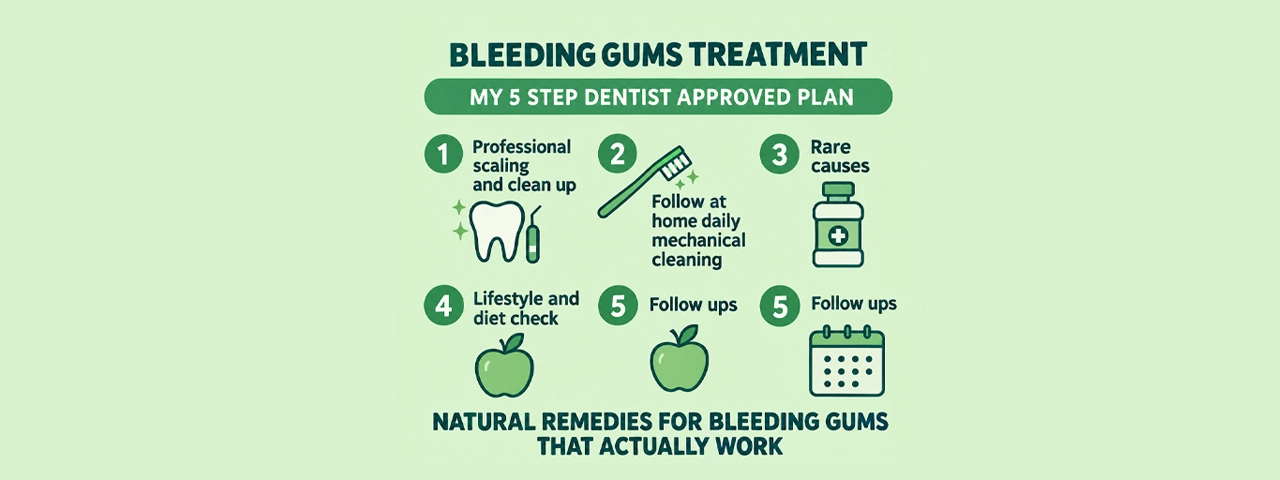
No single treatment fixes every case of bleeding gums, whatever the internet tells you. The cause decides the treatment. Plaque, gum disease, a vitamin problem, something else entirely. Sorting out which one you have comes first. The fix follows after that.
If plaque stays on the teeth, it can harden into tartar, which cannot be removed with regular brushing alone. Once tartar has formed, brushing alone cannot remove it.
Getting it off requires proper instruments. That is the entire point of professional dental cleaning. Removing the buildup can reduce gum irritation and give the tissues a better chance to heal.
Early gingivitis can often improve with better oral hygiene and professional dental cleaning when needed. Periodontal disease requires a different level of treatment. When gum pockets and damaged tissue are in the picture, a dentist may recommend deep cleaning below the gum line, or other in-office treatment. By the advanced stage, stopping the bleeding is only part of the job. Controlling the infection and saving what supporting tissue and bone remain is the bigger aim.
Vitamins belong in this conversation too. Severe vitamin C deficiency has a known link with gums that bleed for no obvious dental reason. If your hygiene is solid and the bleeding carries on anyway. The bleeding may have another underlying cause that needs to be evaluated. Before suggesting anything further, a dentist checks your other symptoms and medical history.
Occasional minor bleeding may improve after you correct your brushing and flossing habits. Fix your brushing. Floss properly. Watch it for a week or so. Gums often calm down on their own.
If the bleeding continues, it is time to have it checked by a dentist. Add swollen gums to the picture, or heavy inflammation, or gums pulling away from teeth, or a tooth that feels loose. It is also worth getting checked if your oral hygiene is good but the bleeding continues. All of that can point to gum disease or advanced periodontal disease. Neither improves by waiting.
Then there is the situation people overlook. Your hygiene is genuinely good and the bleeding happens anyway. Get it checked. Plaque is not the only reason gums bleed, and vitamin deficiencies or other health issues can do it too. Once the actual cause is on the table, treatment choice gets simpler.
Bleeding gums are worth paying attention to, even when there is little or no pain. Months go by with the bleeding, mostly because gums do not hurt. Could be plaque, gingivitis, periodontal disease, rough brushing, low vitamin C. Sometimes more than one factor can contribute to the bleeding. Look after your mouth daily and maintain good oral hygiene. These habits can help keep your gums healthy. Gums that keep bleeding anyway have usually gone past what a toothbrush can solve. So find the cause first, then treat that. Book at Dr. Masum’s Dental Clinic when you are ready.
Plaque buildup is a common cause of bleeding gums, while gingivitis can develop when plaque irritates the gums. Brushing too hard can also contribute. Either way, find the cause instead of guessing.
Soft brush. Twice a day. Floss. Clean the gum line while you are in there. I know, thrilling stuff. But plaque comes off through repetition, not force. If the bleeding continues despite these habits, a dentist should evaluate the cause.
Bleeding gums are often linked to gingivitis or another form of gum disease, but they can also have other causes. Gingivitis arrives with bleeding, redness and a puffy soreness. Not every bleeding gum means disease.
Some do. Severe vitamin C deficiency is the famous one. Most cases are not caused by vitamin deficiencies, so do not assume you need supplements. If the bleeding continues, speak with a dentist so the underlying cause can be identified.
If tartar buildup is contributing to the bleeding, professional dental cleaning can be an important part of treatment. Hardened stuff comes off, gums settle, bleeding eases up. If the cause sits somewhere else, cleaning alone will not finish the job, and we dig further.

Stay connected with us on social media for the latest updates, offers, and more. Join our community!
Momtaz Height (3rd Floor), Beside to NCC Bank, Opposite to Islami Bank, Boropol Moor, Halishahar, Chattogram
+880 1778 912823
Copyright © 2026 by Dr. Masum’s Dental Clinic | All Rights Reserved. Powered by Marketing Bee