
As important as daily care is for your dental health, it is equally important to identify tooth decay early. While small cavities or decayed areas may sometimes be painless, they can cause major problems if left untreated.
When you have decay, dental fillings are the easiest and most effective way to strengthen your teeth. They not only keep your teeth functioning properly, but they also look like natural teeth.
This essential guide to dental fillings will show you how dental fillings for cavities work, who needs them, what type of filling material is best for your teeth, and how you can take care of them properly.
A good dentist is very important for dental fillings. A skilled dentist can provide modern, world-class dental treatment and ensure the best care for your teeth. At Dr. Masum’s dental clinic, patients receive dental treatment using modern technology. Due to this, people from different parts of the world, including Bangladesh, come to our clinic in Chittagong to get their smile makeover. At our clinic, you will get all kinds of oral treatments, including dental fillings, clear aligners, and oral s
Each tooth is important for us to eat, chew, and speak. But if we don’t take regular care, small cavities and tooth decay can start, which later create big problems. This condition is known as dental caries, where the enamel of the tooth becomes damaged, and the decay gradually reaches the inner layers. Once damage or decay starts, that compromised tooth can lose its natural function.
Many people have questions in their minds about what causes cavities. A variety of reasons can actually cause cavities, but the most common causes are:
The American Dental Association says that timely detection and treatment of tooth decay can protect tooth health and function. Therefore, maintaining good oral health is very important.
Simply put, a dental filling is a treatment method used to repair the damaged part of a tooth. When cavities and tooth decay form in the tooth, the decayed portion of the tooth is first cleaned. Then the area is filled with a suitable filling material.
This protects the tooth enamel and the inner part of the tooth from further damage. At the same time, it helps in restoring natural tooth structure, so that your tooth can function normally again, such as chewing food, talking, or smiling. Simply put, a small dental filling can often stop a major dental problem in advance.
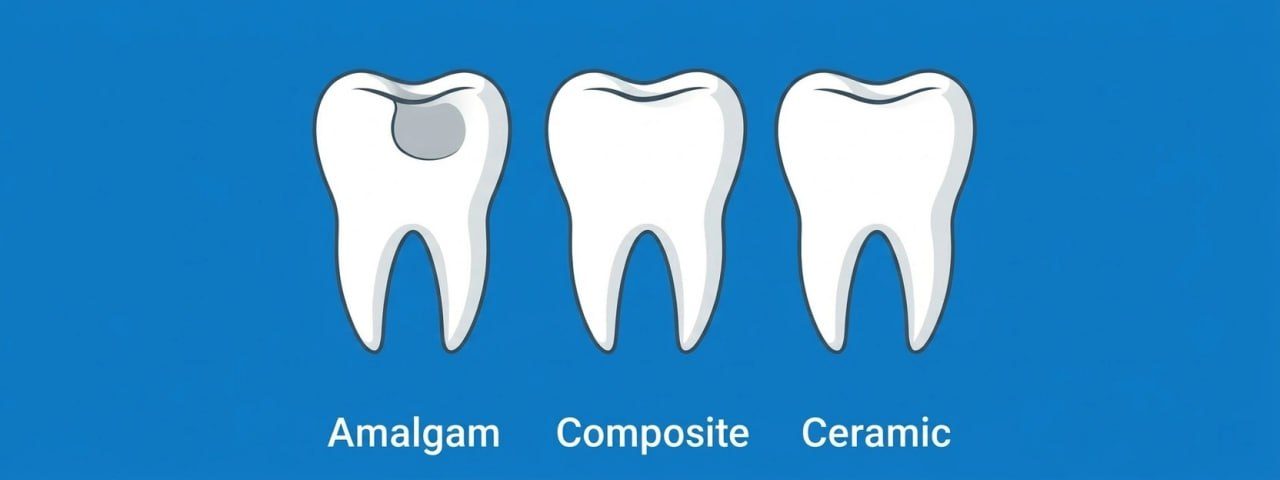
Not all types of dental fillings for cavities are the same. The dentist can use different types of fillings depending on the location of the tooth, the size of the cavity, and your needs.
Each type of filling has its own advantages. Therefore, the dentist usually determines which one will be best for your teeth based on the condition of your teeth.
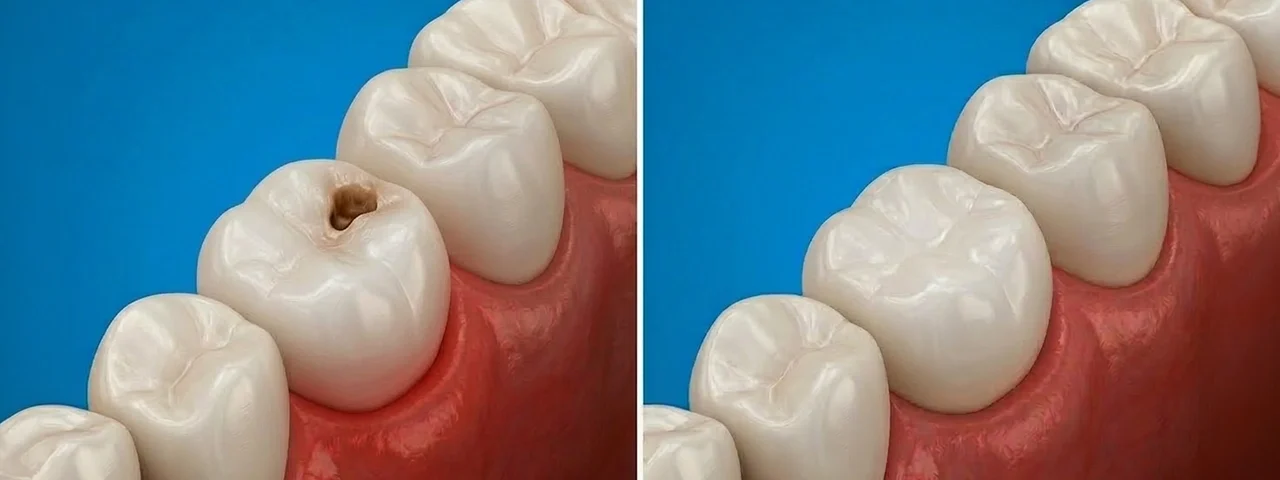
Many people think that fillings are just for stopping cavities. But a good dental filling actually strengthens the tooth and protects it from future decay.
During treatment, the decayed portion of the tooth is first cleaned, and then a suitable filling material is placed there. This allows the filling to adhere well to the tooth and seal the tooth. As a result, bacteria cannot easily enter, and the tooth is also slightly stronger, meaning it reinforces the tooth and helps to restore natural tooth structure.
If you maintain good oral hygiene, a filling can often prevent future decay.
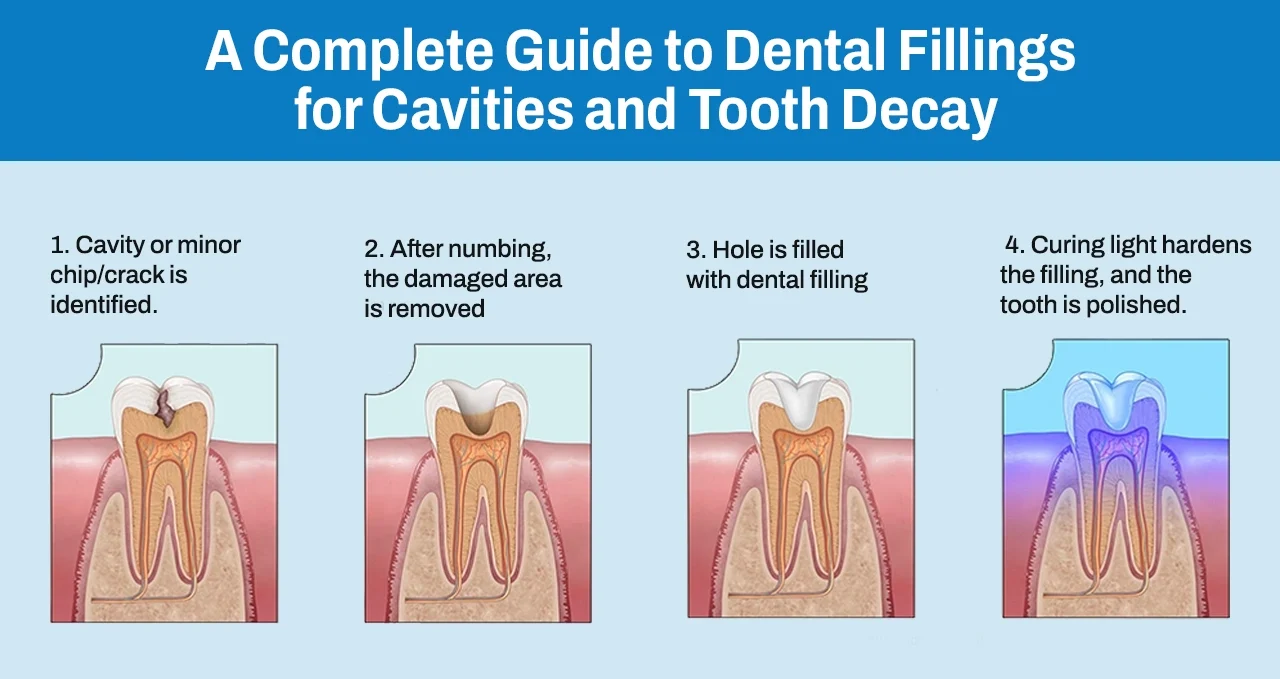
When tooth decay occurs, the dentist first identifies and removes the decayed portion of the tooth. The entire process is known as a dental filling procedure.
First, the dentist removes the decayed portion of the tooth from the affected area. They see the location of the cavity and how much of the inner layers of the tooth have been damaged. Sometimes, the tooth can be compromised, which can lead to further problems if not cleaned properly. Once all the decay is removed, the tooth is ready for the next step.
The next step involves the use of a chosen filling material, such as composite fillings, amalgam fillings, or porcelain fillings. This reinforces the tooth and restores the natural tooth structure. When the filling is carefully placed, the tooth’s normal function is restored, and new cavities and tooth decay can be prevented.
Once you have your teeth with dental fillings, it is very important to keep them in good condition for a long time. If you do not take proper care of them, cavities and tooth decay can develop again. Below is how to maintain healthy fillings and teeth.
Oral hygiene is not just about brushing twice a day. Regular dental care, flossing, and routine check-ups help fillings last longer. Addressing cavities and decay promptly keeps both teeth and fillings safe. Good oral hygiene and check-ups are an effective solution to restore and ensure teeth remain healthy and strong.
Dental fillings for cavities are a simple but effective treatment to stop tooth decay and restore teeth. When cavities and tooth decay begin, timely dental fillings can save teeth from major damage. With the right filling material, regular oral hygiene, and following the dentist’s advice, teeth will stay good for a long time, and it will also be easier to prevent future decay. If you have any signs of cavities or tooth decay in your teeth, talk to an experienced dentist without delay. Book an appointment at Dr. Masum’s Dental Clinic today and get back your healthy, strong, and confident smile.
If you are looking for the best dental care in Chittagong, Dr. Nurul Kabir Masum today and experience world-class dentistry tailored to your needs. His dedication, expertise, and patient-focused approach truly set him apart as the best dentist in Chittagong.
Some people think that the tooth will hurt during the filling, or there will be teeth sensitivity afterwards. The truth is, modern dental filling procedures are almost painless. Sometimes there may be mild temporary Sensitivity after a filling because the tooth has just been treated. It usually goes away in a few days, and the tooth enamel becomes stronger, making the fillings more permanent.
Yes, fillings don’t just fill holes. It strengthens the tooth, and fillings protect the tooth, so that more cavities do not occur. Properly cared for, fillings help prevent future decay and restore compromised teeth. That is, fillings are an effective way to protect teeth from future decay.
Fillings usually last for many years, but exactly how long fillings last depends largely on the material and your daily care. In back teeth where chewing pressure is high, fillings can wear down a little faster. Routine dental check-ups and good dental care ensure that fillings stay strong and restore your smile for a long time.
No, not all fillings are equal. Composite resin, amalgam, porcelain, and ceramic fillings, each has different uses. Some fillings are tooth-colored, which blend in with natural teeth, and some are stronger, which can withstand the pressure of chewing on the back teeth. Your dentist will decide which type of filling is best for you.
Yes, it is generally safe to eat after getting a filling. But if the filling is new, you will have to eat light food for a few hours. This makes the filling sit well and strengthens the teeth. It is best to avoid very hard or sticky foods for the first 24 hours.
To help fillings last longer, it is important to maintain good oral hygiene. Brushing, flossing, and using fluoride toothpaste daily protect both the filling and your teeth. Regular routine dental check-ups can help make common dental fillings last longer and prevent new cavities and tooth decay.

Stay connected with us on social media for the latest updates, offers, and more. Join our community!
Momtaz Height (3rd Floor), Beside to NCC Bank, Opposite to Islami Bank, Boropol Moor, Halishahar, Chattogram
+880 1778 912823
Copyright © 2026 by Dr. Masum’s Dental Clinic | All Rights Reserved. Powered by Marketing Bee