
For a proper smile to work, a dentist doesn’t just reach for a shade guide. It turns out, the teeth are only one part of the job. They sit within the face, and the surrounding facial features play a major role in how the smile looks.
Two patients with similar teeth can walk out of the same clinic with completely different smiles, because their lips and their facial proportions are doing different things. The dentist has to consider these factors, not just the teeth.
This post walks through how facial proportion and smile analysis work, and how dentists use both when they plan a smile.
A natural smile is not the result of a checklist. It takes assessment and clinical judgement, plus a dentist who has been doing this long enough to know what they are looking at. Dr. Masum has been running the clinic for 15 years. His approach is the opposite of a template. The face in front of him comes first. In our clinic we watch how the lips move when the patient smiles, and where the gum line sits, before we propose anything. A patient concerned about a gummy smile can receive a treatment plan designed around their facial features. Our clinic also runs 3D previews of the proposed smile on a screen before any drilling starts. This gives the patient a clearer idea of the proposed result before treatment begins.
Smile design is the part the patient never sees. A dentist develops the treatment plan through clinical assessment and digital planning before any treatment begins. The teeth are obviously part of it. The gums and the lips are part of it too.
So is the face the smile is going to sit in. If the design is wrong, the patient ends up with teeth that look fine in a photo. The same teeth may look different when the patient smiles naturally.
Two patients with similar teeth often need different smiles. The same tooth shape on a long face can look off on a round one. So the dentist looks at the patient first, then at the teeth.
A smile that looks great in a selfie but throws off the bite is not a finished job. The patient still has to eat with those teeth and talk with them. Whatever the dentist changes, the patient should be able to do both without thinking about it.
People mix these up. Smile analysis is the looking part. The dentist takes stock of the mouth and the face. They write down what they see. That write-up is the assessment. Smile design is the next step.
The dentist takes that assessment and works out what, if anything, to change. Facial analysis is the bit of the assessment that lets the dentist plan a smile that suits the patient in the chair, instead of using whatever tooth shape happens to be in fashion.
Looking at the teeth alone may not provide a complete picture of how a smile will look with the rest of the face. A smile is one part of the overall appearance of the face.
Two people with similar-looking teeth can have very different smiles. The reason is usually the lips, and how much gum and tooth they show when the person smiles. A dentist who plans a smile without looking at the face around it tends to produce something that looks correct in a mirror. The same smile can look off in a photo, because the face is doing the work the dentist ignored. The face and the teeth have to be planned together.
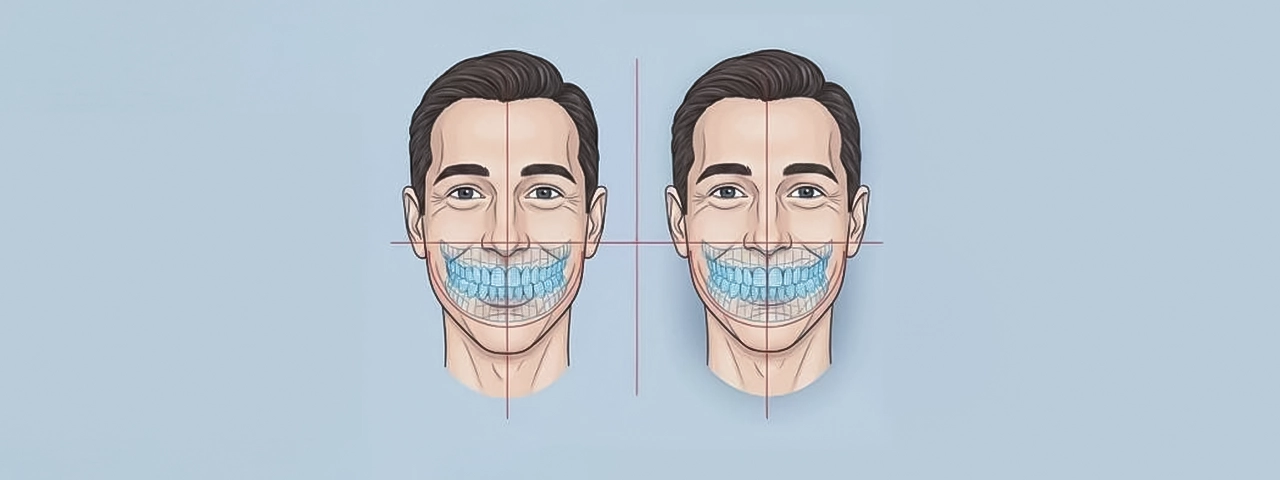
The dental midline refers to the centre line between the upper central incisors, while the facial midline is a reference line used to assess the centre of the face. Ideally, the dental midline should be in harmony with the facial midline, although a small difference may not be noticeable. These two midlines do not always align perfectly, and a small difference can be acceptable.
A small difference between the two midlines may not be noticeable, but a larger discrepancy can make the smile appear less balanced. For a more precise read on how the face and the teeth relate, the clinic runs Digital Smile Design (DSD) along with 3D intraoral scanning. Those findings are then used to develop a treatment plan tailored to the patient’s dental and facial features.
A good smile is not just white or straight teeth. The size of each tooth has a say in how the smile looks. So does the shape of each tooth. So do the lips, and the face the smile sits in.
People get hung up on symmetry. A smile can be perfectly centred on the face and still look unbalanced. The rest of the face is doing its own thing when the patient smiles, and the smile has to fit into that. Plan only the teeth and the smile stops fitting the rest of the face. That is what makes the smile look natural.
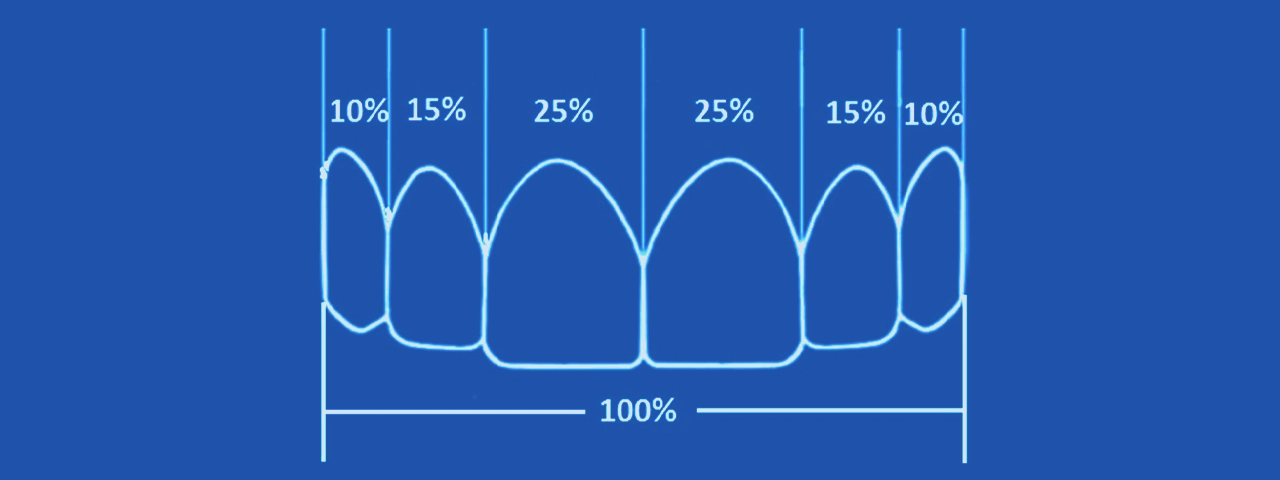
A tooth can be the right size and still look wrong, if the width and the height are out of proportion, or if it does not sit well next to the teeth around it. There is an old idea called the Golden Proportion, which says each front tooth should be about 60% of the width of the one next to it, when you look at the smile from the front. Some dentists still bring it up. It is not really a rule. Tooth proportions are different on every face. A ratio that looks right on one patient often looks off on the next one.
The smile line describes the relationship between the curve of the upper front teeth and the upper border of the lower lip when a person smiles. A smile tends to look more harmonious when the curve of the upper teeth follows the curve of the lower lip. If the upper teeth do not follow the lower lip’s curve, the smile looks flatter, and not in a good way. A dentist tends to check the smile line before any work starts on the front teeth.
Smile design does not stop at tooth alignment. It also looks at how the teeth sit against the lips when the patient smiles.
Smile treatment planning starts with gathering information. The dentist assesses the teeth, gums, lips, and facial features together. Digital scans and X-rays give the dentist a record of the teeth. Facial analysis gives them a record of the face. Together they give the dentist what they need to plan treatment that actually fits the patient.
The clinic uses 3D intraoral scans and digital X-rays to assess the teeth and supporting structures. The bite gets checked too. An intraoral scanner creates a digital record of the teeth. The patient does not have to bite into a tray of putty to make that record.
This digital record is the baseline. Anything the dentist changes from there is compared against it.
A smile depends on more than the shape of the teeth. The face around the mouth has a lot to do with it. So does the symmetry of that face. Digital Smile Design (DSD) tools can help dentists combine facial photographs and dental information to analyse the relationship between the teeth, lips, and facial features. Virtual Smile Preview And Patient Input
Once the dentist has a proposed design, the patient gets to see it on screen. The patient’s feedback at this point is what lets the dentist refine the plan before any work starts.
This is also the point where the patient gets a realistic idea of what the result will look like. This allows the patient to understand the proposed treatment before the procedure begins.
The treatment approach comes out of the patient’s needs and the final smile design. Depending on what the treatment is, digital CAD/CAM technology may be used to plan or fabricate restorations and other dental appliances.
Each step is built around the patient’s dental needs and the goals of the treatment plan. The aim is for the final treatment to work with the natural dental structure and the facial features, not against them.
A smile that works is one that fits the patient’s face. Tooth alignment and colour are only part of the overall result. The dentist has to look at facial proportions, the dental midline, tooth size, and the smile line. Done well, the whole process gets more predictable. The patient ends up with a smile that suits their face, the result can look more natural and balanced. At Dr. Masum’s Dental Clinic, treatment planning is built around the patient in the chair. Book a consultation to talk through the options for your smile.
There is no fixed timeline. A simple cosmetic fix can be done in a couple of visits. Anything more involved, like veneers or work on multiple teeth, can run into weeks. The dentist can give you a real timeline after the first assessment, when they know what they are actually working with.
It can be done, but assessing the facial features can help the dentist create a smile that is better balanced with the patient’s overall appearance. The teeth might be the right shape and the right colour, but if the dentist has not looked at how they sit against the lips and the face, the smile tends to look like it belongs to someone else.
Not necessarily. Straight teeth are one part of a smile. Tooth shape, tooth proportions, how much gum shows when you smile, where your lips sit, and the shape of your face all have a say in how the smile actually looks. An assessment will tell you whether any of those need work.
Usually not exactly. The mock-up is a target. The final result is influenced by clinical factors such as tooth position, bite, gum contours, and the condition of the teeth. The mock-up is there so the patient can see the direction. The final result is in the same direction, but it is rarely identical.
Yes. A gummy smile is one of the things smile design is built for. The treatment depends on what is causing it. The cause may involve excessive upper-lip movement, excessive gingival display, altered passive eruption, or the proportions of the teeth. The dentist figures out the cause before recommending anything.
You can’t exactly predict how long something will last in dentistry. It’s not like force isn’t applied to it regularly. How long the result lasts depends on the treatment used, oral hygiene, bite, habits, and regular dental care.

Stay connected with us on social media for the latest updates, offers, and more. Join our community!
Momtaz Height (3rd Floor), Beside to NCC Bank, Opposite to Islami Bank, Boropol Moor, Halishahar, Chattogram
+880 1778 912823
Copyright © 2026 by Dr. Masum’s Dental Clinic | All Rights Reserved. Powered by Marketing Bee